In Kerala, the start of the Zodiac New Year when the sun enters into Sidereal Aries, Ashwini nakshatra, is celebrated as Vishu. Usually it comes around 14th or 15th of April. Bihu in Assam and Baisakhi in Punjab are celebrated around the same time of year. It is said that what one sees when one opens one’s eyes on Vishu morning is an indication of what one can expect in the year to come. Thus on Vishu, effort is made to assure one opens one’s eyes before an auspicious Vishukani viz. abundance of everything.
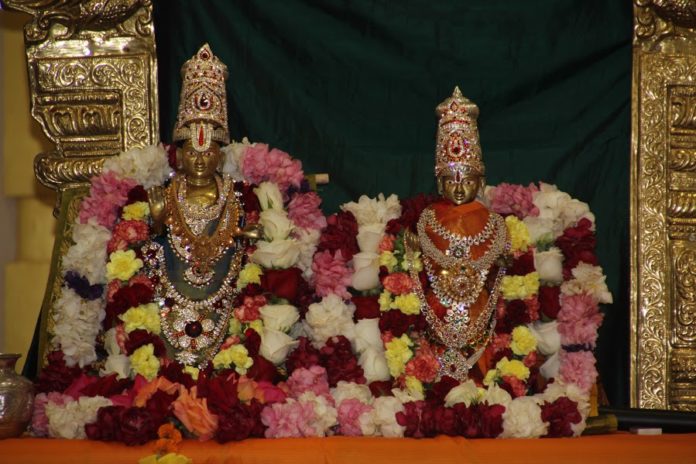
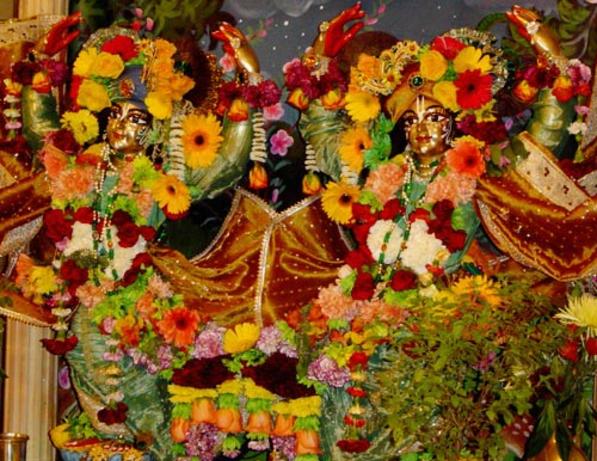
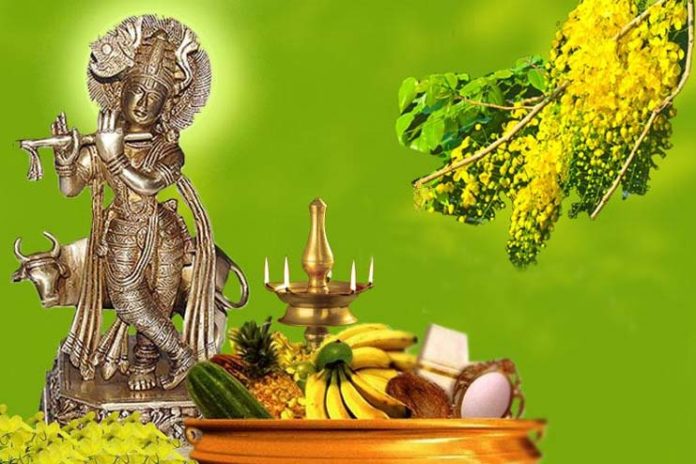
The Malayalam word kani literally means “that which is seen first,” so “Vishukkani” means “that which is seen first on Vishu.” Arranged in the family puja room the night before by the elders in the family, the Vishukkani is a panorama of auspicious items, including images of Lord Vishnu, flowers, fruits and vegetables, clothes and gold coins. Lord Vishnu, the preserver of creation, is the aspect of the Paramatman that is focused upon during Vishu. In Indian astrology, Vishnu is seen as the head of Kaala Purusha, the God of Time. As Vishu marks the first day of the Zodiac New Year, it is an appropriate time to offer oblations to Lord Vishnu.
Akshatam, a mixture of rice and turmeric, which is divided into halves of husked and un-husked rice, is placed in a special bowl called an uruli. The uruli traditionally is made of panchaloham, an aggregate of five metals. Panchaloham being symbolic of the universe, which is comprised of the five great elements: earth, water, fire, air and space. A nice, well-starched cloth is then pleated fan-like and inserted into a highly polished brass kindi (a spouted puja vessel used for pouring sacred water). The val-kannadi, a special type of mirror with an extremely long and thin handle, often decorated with gold, is also inserted into the kindi. The kindi is then placed in the uruli on top of the rice.
Two deepams, which are fashioned from the two halves of a split coconut, are also kept in the uruli. The lighting of the deepam welcomes God into our lives and is also symbolic of spiritual knowledge, the remover of the darkness of ignorance.
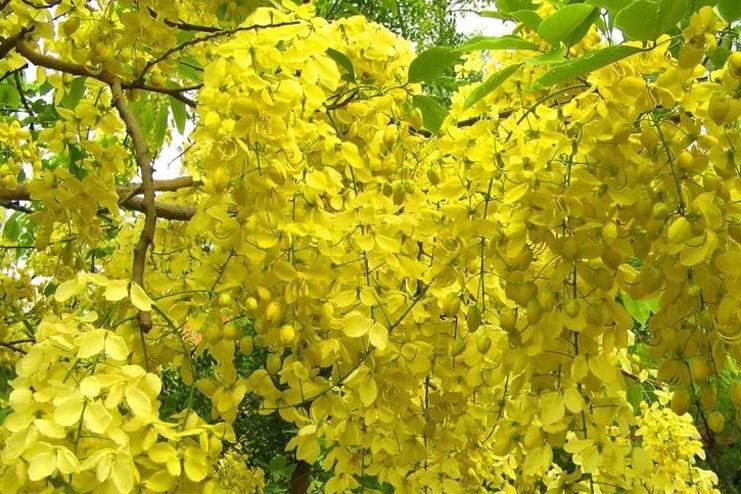 Gold, both in colour and in coin is central to the Vishukkani. Kanikkonna, a golden-yellow flower associated with Sri Krishna is used liberally throughout the puja room. This flower only blooms in the month surrounding Vishu. In the puja room, the flower verily represents the sun itself, the eyes of Lord Vishnu. Gold coins are symbols of monetary affluence, as well as cultural and spiritual wealth, which the elders of the family must share freely with the younger generation.
The Vishukkani will also be laden with gold-coloured fruits and vegetables, such as bananas, jackfruit, golden cucumber, etc. The akshatam, as it is full of turmeric, also is gold in colour, as is the shiny brass of the kindi, the panchaloham and the reflection of the mirror. A spiritual book, such as the Bhagavad-Gita, is also made part of the arrangement. The book is the pramanam, the instrument used for attaining the eternal, non-perishable wisdom of the Rishis as well as a symbol of that knowledge itself.
The elers who arranges the Vishukkani will sleep in the puja room and wakes up during the auspicious hour of the Brahma muhurata (4:00 to 6:00 a.m.) and will light the oil-lamp wicks and take in the auspicious sight. They will then walk to the rooms where the rest of the family is sleeping and wake them up and by covering their eyes, will then lead them to the puja room, where will allow them to take in the auspicious sight.
Upon opening one’s eyes, one is overwhelmed with the glorious darshan of the Lord. The mirror which is symbolic of Bhagavati (Devi), not only increases the lustre of the Vishukkani via the reflection it offers, but also shows our own face, reminding us that God is not someone sitting in the heavens upon a golden throne, but the pure consciousness that is our true nature. The mirror also points to the importance of making our mind pure enough to render this truth unadulterated.
The Vishukkani is not reserved only for those who come to the puja room, but is taken around for the viewing of the elderly and sick that are perhaps too frail to come to the puja room. It is also brought outside and shown to the family cows. As it is brought to the cowshed, it in fact is on display for the birds, the trees, for all of nature to see.
Vishukkani points to a year of abundance both spiritually and materially. Food, light, money, knowledge all should fill our life. Taking in the Vishukkani we should pray that the vision remains with us throughout the year. It is not enough that the joy we take from viewing the Vishukkani comes only to our eyes. It must reflect in our thoughts and in our actions. The auspicious start of the year, which has come to us due to the grace of beginning it with a divine vision, is not for us alone. It is up to us to spread this love, happiness and hope to the rest of society.
Vishukkaineettam, the distribution of wealth, is another aspect of the festival. It should be given freely and accepted with reverence. On Vishu, the elders will not only give money to their children but also to each and every family member.
By Premji
 On one occasion, Parvati and Parameswara were playing a game of paramapatham. Parvati was winning game after game by the rules, but Parameswara is said to have claimed the victory at each game, wantonly, to Parvati’s intense chagrin. So Parvati demanded to have an umpire and one Chitranemi, a creation of Parameswara, was chosen. As an underling of Parameswara, he sided with his master most unjustly. This provoked Parvati’s anger and she cursed Chitranemi that he should become a leper for discharging his duty in this most unfair manner.
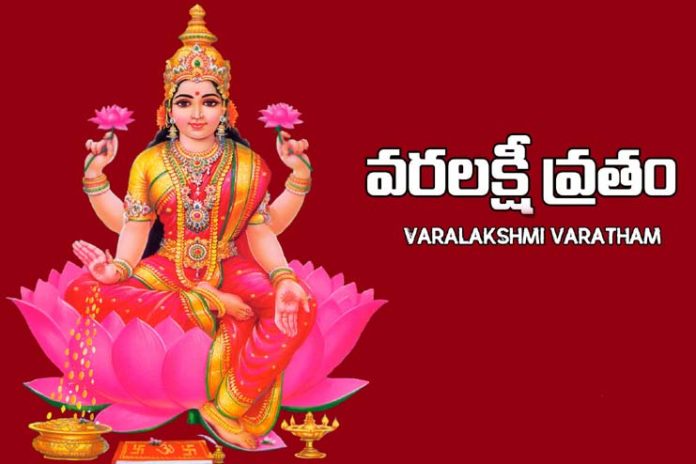
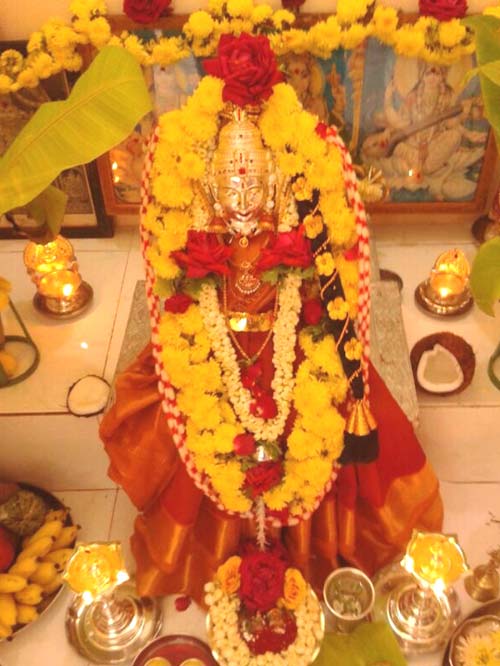
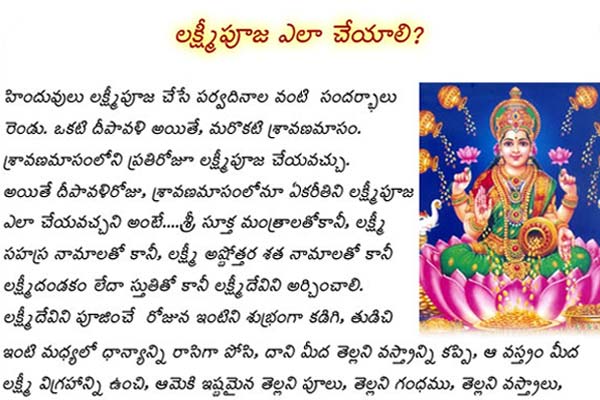 Varalakshmi Vrata is performed by married woman for the well being of all the family members, especially husband, to get progeny etc. It is believed that worshiping Goddess Varalakshmi on this day is equivalent to worshiping Ashtalaksmi – the eight goddesses of Wealth, Earth, Learning, Love, Fame, Peace, Pleasure, and Strength. Because of the popularity in some states of India, it is declared as an optional official holiday in India.
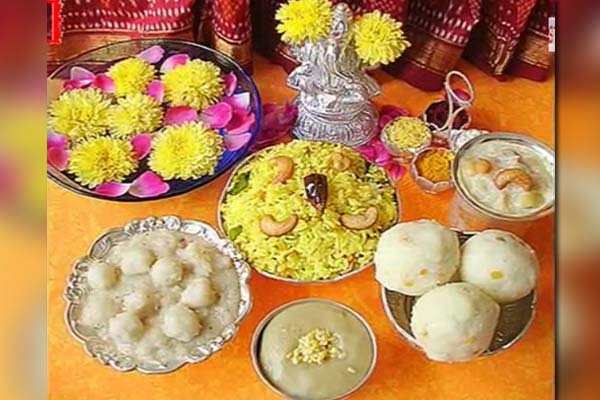 Various delicious sweets and foods are made and offered to the goddess. Here is a collection of Varalakshmi Vratam Naivedyam.